2-bay NAS Black Friday Deals 2026
Amazon US · USDAmazon sale dates · Nov 19–30, 2026
Amazon Black Friday deals
As an Amazon Associate we earn from qualifying purchases. Prices and availability are accurate as of the time indicated and may change. The price and availability displayed on Amazon at the time of purchase apply.
| Product and offer | Amazon price |
|---|---|
$199.99List Price Buy on Amazon | |
$103.99List Price Buy on Amazon | |
$84.99Typical price Buy on Amazon |


Regular listings
| Product and offer | Amazon price |
|---|---|
$71.49Checked Buy on Amazon | |
$118.99List Price Buy on Amazon | |
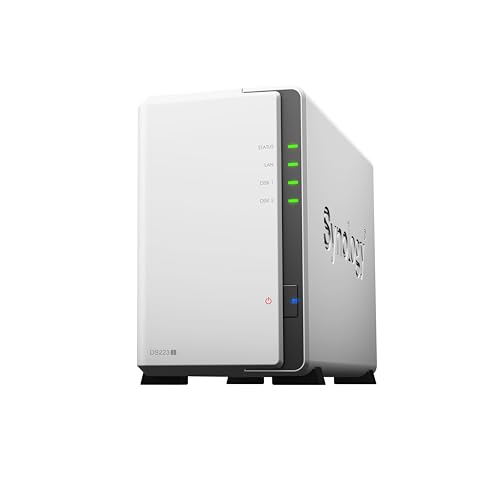 20% below reference Synology 2-Bay DiskStation DS223j (Diskless) | $167.00List Price Buy on Amazon |
$179.99List Price Buy on Amazon | |
$243.00List Price Buy on Amazon | |
$285.99Checked Buy on Amazon | |
$291.00List Price Buy on Amazon | |
$299.00Checked Buy on Amazon | |
$362.99Checked Buy on Amazon | |
$379.98List Price Buy on Amazon | |
$486.89Checked Buy on Amazon | |
$796.72Checked Buy on Amazon | |
$981.42Checked Buy on Amazon |


Frequently asked questions
Is it better to buy a 2-bay NAS with disks included or diskless?
Diskless offers flexibility if you want to choose drives yourself or already own compatible disks. Pre-populated is convenient, but always verify the included drive models and their warranty in the product description.
Do all 2-bay NAS devices support hot-swapping drives?
Not all support hot-swapping. Confirm this feature by referencing the NAS manual or official product specifications, as some entry-level models require power-downs for swapping drives.
Related Black Friday guides
60 guides
NAS, DAS and enclosures
- NAS hardware
- 4-bay NAS
- 6-bay NAS
- 8-bay NAS
- 10GbE NAS
- All-flash NAS
- Rackmount NAS
- ASUSTOR NAS
- ASUSTOR AS5402T
- ASUSTOR AS5404T
- ASUSTOR AS6702T
- ASUSTOR AS6704T
- QNAP NAS
- QNAP TS-253E
- QNAP TS-264
- QNAP TS-453E
- QNAP TS-464
- QNAP TS-664
- QNAP TS-673A
- QNAP TS-832PX
- QNAP TS-873A
- QNAP TS-932PX
- Synology NAS
- Synology DS1525+
- Synology DS1825+
- Synology DS223
- Synology DS224+
- Synology DS225+
- Synology DS423
- Synology DS423+
- Synology DS425+
- Synology DS620slim
- Synology DS725+
- Synology DS923+
- Synology DS925+
- TerraMaster NAS
- TerraMaster F4-425
- TerraMaster F6-425 Pro
- UGREEN NAS
- UGREEN DH2300
- UGREEN DXP2800
- UGREEN DXP2800 GT
- UGREEN DXP4800 GT
- UGREEN DXP4800 Plus
- UGREEN DXP4800 Pro
- UGREEN DXP480T Plus
- UGREEN DXP6800 Pro
- UGREEN DXP6800 Ultra
- UGREEN DXP8800 Plus
- UGREEN DXP8800 Ultra
- Drive enclosures
- Sabrent drive enclosures
- NVMe enclosures
- Direct-attached storage
- 4-bay DAS
- 5-bay DAS
- QNAP TR-004
- TerraMaster D4-320
- Mac mini docks
- Mac mini Thunderbolt 5 docks