Synology DS725+ Black Friday Deals 2026
Amazon US · USDAmazon sale dates · Nov 19–30, 2026
Amazon Black Friday deals
As an Amazon Associate we earn from qualifying purchases. Prices and availability are accurate as of the time indicated and may change. The price and availability displayed on Amazon at the time of purchase apply.
Amazon hasn’t reported a Black Friday deal for these listings. Check Amazon
Regular listings
| Product and offer | Amazon price |
|---|---|
$157.26Checked Buy on Amazon | |
$313.89Checked Buy on Amazon | |
$315.18Checked Buy on Amazon | |
$644.00List Price Buy on Amazon | |
$1,515.00Checked Buy on Amazon | |
$1,549.00Checked Buy on Amazon | |
$1,599.00Checked Buy on Amazon | |
$1,799.00Checked Buy on Amazon | |
$1,799.00Checked Buy on Amazon | |
$1,799.00Checked Buy on Amazon | |
$2,349.00Checked Buy on Amazon |


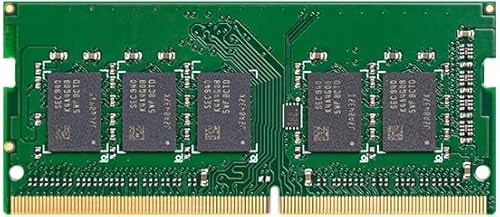

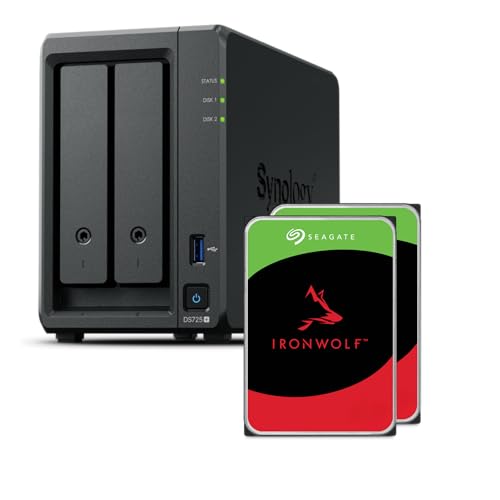


Related alternatives
Compare related models or capacities and check the exact specifications and fit before buying.
| Product and offer | Amazon price |
|---|---|
$291.00List Price Buy on Amazon | |
$455.05Checked Buy on Amazon | |
$1,199.00List Price Buy on Amazon | |
$981.42Checked Buy on Amazon |


Frequently asked questions
Can I use only one drive in the DS725+?
Yes, the DS725+ can run with a single drive, but you lose the data redundancy that RAID 1 provides. For important data, always run two drives in a RAID mirror for protection against single-drive failure.
What happens if one drive fails in RAID 1 on the DS725+?
Your data remains accessible on the surviving drive. Replace the failed drive with a compatible model, and the NAS will rebuild the RAID 1 mirror automatically. Always use identical-sized NAS-rated drives for quickest recovery.
Related Black Friday guides
NAS, DAS and enclosures
- NAS hardware
- 2-bay NAS
- 4-bay NAS
- 6-bay NAS
- 8-bay NAS
- 10GbE NAS
- All-flash NAS
- Rackmount NAS
- ASUSTOR NAS
- ASUSTOR AS5402T
- ASUSTOR AS5404T
- ASUSTOR AS6702T
- ASUSTOR AS6704T
- QNAP NAS
- QNAP TS-253E
- QNAP TS-264
- QNAP TS-453E
- QNAP TS-464
- QNAP TS-664
- QNAP TS-673A
- QNAP TS-832PX
- QNAP TS-873A
- QNAP TS-932PX
- Synology NAS
- Synology DS1525+
- Synology DS1825+
- Synology DS223
- Synology DS224+
- Synology DS225+
- Synology DS423
- Synology DS423+
- Synology DS425+
- Synology DS620slim
- Synology DS923+
- Synology DS925+
- TerraMaster NAS
- TerraMaster F4-425
- TerraMaster F6-425 Pro
- UGREEN NAS
- UGREEN DH2300
- UGREEN DXP2800
- UGREEN DXP2800 GT
- UGREEN DXP4800 GT
- UGREEN DXP4800 Plus
- UGREEN DXP4800 Pro
- UGREEN DXP480T Plus
- UGREEN DXP6800 Pro
- UGREEN DXP6800 Ultra
- UGREEN DXP8800 Plus
- UGREEN DXP8800 Ultra
- Drive enclosures
- Sabrent drive enclosures
- NVMe enclosures
- Direct-attached storage
- 4-bay DAS
- 5-bay DAS
- QNAP TR-004
- TerraMaster D4-320
- Mac mini docks
- Mac mini Thunderbolt 5 docks