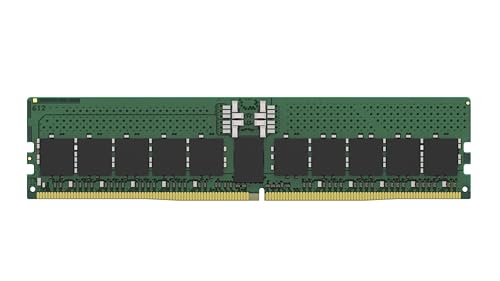
Selecting DDR5 ECC RAM for servers combines emerging technology with compatibility checks unique to the UK market. DDR5’s on-die ECC operates within the chip, but full error-correcting protection depends on module, CPU, and motherboard support. Always cross-reference official memory compatibility lists and pay attention to vendor documentation.
Verify ECC Support at System Level
DDR5 introduces on-die ECC for improved chip reliability, but system-level error correction still depends on a platform’s support for true server-grade ECC. Before buying, consult your server or workstation’s documentation to verify if both the CPU and motherboard are compatible with ECC UDIMMs or RDIMMs.
Listings may advertise ECC as a feature, but this often only refers to the basic internal correction. Genuine end-to-end ECC requires qualifying modules matched to supporting server platforms. Avoid desktop motherboards unless explicitly supporting ECC, and review platform-specific guidance—especially for leading server brands.
Understanding Module Types and Fit
DDR5 server RAM uses module types like RDIMM, LRDIMM, and ECC UDIMM. Each variety fits certain motherboard sockets and has voltage or buffering requirements only met by compatible platforms. Your system manual and qualified vendor lists will specify both speed (for example, DDR5-4800) and maximum module capacity supported per slot.
Physical fit and heatspreader dimensions are rarely an issue with standard servers but may impact high-density or 1U enclosures. Compare model codes in listings, such as MTC20C2085S1EC48BA1, with manufacturer documentation to guarantee compatibility and that you order the correct ECC-enabled format.
Assessing Value: Price per GB and Returns
With DDR5 ECC RAM a premium product, use cost-per-GB to compare offers. Check that UK VAT and shipping are included in the final price, as these affect total outlay. Multipacks may be better value, but confirm whether the listed quantity matches your channel configuration needs.
Business-focused sellers often restrict returns for server memory, so factor this into your supplier choice. Seek clear warranty details, and if possible, choose a seller providing sufficient after-sales technical support. Retain all receipts and packaging for potential warranty use.
Checklist: What to Read Before Buying
Before confirming your purchase on Amazon.co.uk or a specialist, check the exact server model’s qualified memory list for permitted ECC configurations. Look for both module type and capacity. Confirm with the module’s specification sheet (available on vendor websites) that it supports the needed features and speed.
After delivery, check all module labels match the ordered specification and review system POST or BIOS to ensure recognition and ECC status. Use system monitoring tools to confirm ECC and speed after installation. Consider waiting if newer DDR5 modules are expected, as pricing may stabilise at launch.