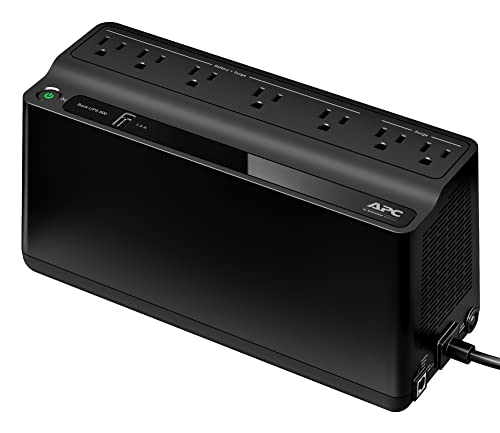
UPS battery backups Black Friday Deals 2026

Amazon US · USDAmazon sale dates · Nov 19–30, 2026

Amazon Black Friday deals

As an Amazon Associate we earn from qualifying purchases. Prices and availability are accurate as of the time indicated and may change. The price and availability displayed on Amazon at the time of purchase apply.

Product and offerAmazon price
$149.99List Price $256.80Checked
Buy on Amazon
$149.99List Price $249.99Checked
Buy on Amazon
$189.49List Price $249.99Checked
Buy on Amazon
$189.98List Price $249.99Checked
Buy on Amazon
$139.99List Price $174.99Checked
Buy on Amazon
$74.75Typical price $87.96Checked
Buy on Amazon

Regular listings

Product and offerAmazon price
$43.91Typical price $48.22Checked
Buy on Amazon
$59.95List Price $64.95Checked
Buy on Amazon
$62.50List Price $79.99Checked
Buy on Amazon
$77.95Checked
Buy on Amazon
$79.95Checked
Buy on Amazon
$79.99List Price $85.99Checked
Buy on Amazon
$89.95List Price $99.95Checked
Buy on Amazon
$109.99Checked
Buy on Amazon
$119.95List Price $129.95Checked
Buy on Amazon
$199.95List Price $219.95Checked
Buy on Amazon
$239.95List Price $274.95Checked
Buy on Amazon
$359.95Checked
Buy on Amazon
$700.95List Price $754.00Checked
Buy on Amazon

Buying guide

A UPS battery backup protects computers, servers, and network devices from power loss, surges, and voltage fluctuations. Choosing the right UPS involves evaluating capacity, form factor, battery runtime, true sine wave output, and integration features. This buying guide walks you step-by-step through technical assessment and outlines the key signals to buy or wait for a UPS.

Capacity, Sizing, and Battery Runtime

UPS systems are rated either in VA (volt-amps) or watts. Record the wattage draw of all intended devices using actual load or estimations from power adapters. Maintain a margin (20-30%) above estimated load for safe operation and longer runtime.

Runtime depends on battery capacity and attached load. For servers and networking equipment, target 5-15 minutes of battery backup during outages. Check vendor runtime charts for your expected load. More capacity means longer operation, but also higher price and size, so balance actual needs against cost.

UPS Form Factor, Output Type, and Features

UPS units come in tower and rack-mount form factors. Choose rack-mount for datacenters or structured cable closets and tower for desktops or small home servers. True sine wave output is preferable for sensitive or active power factor correction (APFC) devices; budget models may offer only simulated sine wave output.

Review the listing for the number and type of protected outlets, USB or serial management, hot-swappable batteries, and LCD panels for runtime readouts. Advanced models provide network monitoring, environmental sensing, and USB connectivity for automated shutdown during blackouts.

Compatibility, Runtime Planning, and Installation

Check your total power requirements and confirm plug type compatibility between UPS and critical equipment. Some high-capacity UPS units use NEMA or IEC input and output jacks beyond standard wall plugs. Always verify cord lengths and provided cabling before installation.

Install your UPS close to the load, ensuring adequate ventilation to avoid overheating. Some units require clearance for battery removal or network card slots for SNMP management. Review the user manual for correct installation procedures and safety considerations before connecting new or existing hardware.

Deciding to Buy or Wait for a UPS Backup

Buy a UPS immediately if your region experiences frequent outages, brownouts, or voltage instability affecting uptime or hardware safety. Immediate upgrades are wise if equipment replacement or downtime is costlier than the UPS itself.

Wait if your power reliability is strong, or if you plan a full infrastructure upgrade. Newer models may have improved battery technology or integration features. If current capacity rarely approaches peak load, delay to match future hardware changes, but don’t ignore critical protection if you expand the network or add high-draw devices.

Frequently asked questions

How do I estimate UPS runtime for my system?

Add up the wattage of connected devices, then use the manufacturer’s published runtime tables to estimate backup duration at that draw. A 600W load on a 1000VA/900W UPS typically gets less than 10 minutes runtime.

What is the difference between sine wave and simulated sine wave UPS units?

True sine wave UPS models produce pure AC output suitable for all electronics, especially APFC power supplies. Simulated sine output is suitable for basic devices, but may cause issues with sensitive or modern equipment during switchover.

Related Black Friday guides

Browse all Black Friday categories